Upon your arrival in Kathmandu, Nepal, a friendly representative from Manaslu Trek will greet you at the airport and escort you to your hotel. This marks the beginning of your Mustang Tiji Festival Trek adventure, offering a smooth and comfortable start to your journey in the Himalayan region.
In the evening, we host a special welcome dinner featuring authentic Nepalese cuisine, accompanied by a refreshing reception drink. This welcome evening also provides an opportunity to meet your fellow trekkers, discuss the Tiji Festival Trek itinerary, and receive essential tips for trekking in the Himalayas, including acclimatization, packing, and safety advice. Starting your journey in Kathmandu allows you to ease into the adventure while enjoying the city’s vibrant culture and setting the stage for your unforgettable Himalayan trekking experience.
Transfer: 30-45 min |
Accommodation: Hotel |
Meal: Welcome Dinner
Today, explore the rich culture, history, and heritage of Kathmandu Valley on this full-day city tour before your Mustang Tiji Festival Trek. The tour takes you to some of Kathmandu's most famous UNESCO World Heritage Sites, offering a perfect introduction to Nepalese art, architecture, and traditions with our professional English-speaking City Tour Guide:
- SWOYAMBHUNATH , also known as the Monkey Temple, is one of Kathmandu Valley’s most iconic Buddhist stupas. Perched on a hilltop, it offers panoramic views of Kathmandu city and features ancient shrines, prayer wheels, and intricate carvings. The site is a spiritual and cultural landmark, attracting both pilgrims and tourists.
- KATHMANDU DURBAR SQUARE is a UNESCO World Heritage Site and the historic heart of Kathmandu City. Known for its ancient palaces, temples, courtyards, and intricate wood carvings, it reflects Nepalese art, culture, and architecture. A visit to this iconic square offers a glimpse into the royal history of Nepal.
- BOUDHANATH STUPA is one of the largest and most important Buddhist stupas in Nepal and a UNESCO World Heritage Site. Known for its massive white dome, colorful prayer flags, and iconic Buddha eyes, it serves as a major center for Tibetan Buddhism. Visiting Boudhanath provides an immersive cultural and spiritual experience.
- PASHUPATINATH is one of Nepal’s most sacred Hindu temples, dedicated to Lord Shiva and located on the banks of the Bagmati River in Kathmandu. Famous for its intricate pagoda-style architecture, cremation ghats, and spiritual rituals, it offers visitors a deep cultural and religious experience.
Our knowledgeable guide will tell you interesting things about the religious, historical, and architectural importance of each landmark. Kathmandu is a unique city with a rich culture and a spiritual atmosphere that will make your city tour an interesting and memorable way to learn about Nepalese heritage.
Sightseeing: 7-8 Hours |
Accommodation: Hotel |
Meal: Breakfast
After breakfast in Kathmandu, you will leave your hotel early in the morning (around 7–8 AM) and pass through the Nagdhunga Pass before descending into the green valleys along the Trishuli River. Along the way, there is a popular stop at Malekhu, known for its riverside views, fresh Himalayan coffee, and local fish snacks. Around midway, you will stop for lunch in Mugling or Kurintar, where you can enjoy a traditional Nepali meal while relaxing beside the river and viewing the Manakamana Cable Car crossing the valley. The drive continues along the Marsyangdi River through towns like Damauli, and as you approach Pokhara, the stunning Annapurna range begins to appear on the horizon. On arrival, you will check into your hotel in the Lakeside area, freshen up, and relax with beautiful views of Machhapuchhre (Fishtail Mountain). In the evening, you can enjoy a peaceful boat ride on Phewa Lake, visit the Tal Barahi Temple on a small island, and watch the sunset reflecting on the water. Later, take a relaxing walk around Lakeside, a lively area filled with shops, cafes, and restaurants, where you can enjoy dinner, live music, and the calm atmosphere of Pokhara.
Distance: 200km |
Transfer Duration: 6-7 Hours |
Accommodation: Hotel l
Meal: Breakfast/Lunch
Early in the morning, you will transfer from Lakeside to Pokhara Domestic Airport for your flight to Jomsom. Flights usually operate between 6:30 AM and 10:00 AM to avoid the strong midday winds of the Kali Gandaki Valley. You will board a small mountain aircraft, such as a Twin Otter or Dornier, designed for short take-off and landing in high-altitude regions. The 20–25 minute flight is incredibly scenic, flying between the towering peaks of Annapurna I and Dhaulagiri, so it is best to choose a seat on the right side for the best views. After landing in Jomsom, where the air is cool and dry, you will begin your trek toward Kagbeni, following the wide and rocky bed of the Kali Gandaki River. The walk to Ekle Bhatti takes about 2 hours and is mostly flat, though walking on gravel and sand can feel tiring, especially as strong Mustang winds begin later in the morning. Along the way, you may notice sacred Shaligram fossils in the riverbed, which hold religious importance in Hinduism. After a short break at Ekle Bhatti, often called the “lonely teahouse,” you will continue trekking for another 1 to 1.5 hours to reach Kagbeni, a charming medieval village with narrow alleys, mud-brick houses, and a timeless atmosphere. Here, you can visit the historic Kag Chode Thupten Samphel Ling Monastery, enjoy the unique desert landscape, and stand at the gateway to Upper Mustang, with beautiful views of Nilgiri in the distance.
Note: If the flight is canceled due to inclement weather, we will drive to Kagbeni by road. Landslides or overflowing torrents occasionally cut through this road route, particularly during the summer months (August and September). It is sometimes necessary to adapt to the surroundings and walk for a few minutes to reach another vehicle on the other side of the disaster. These rare imponderables are likely to lengthen travel times. When this happens, we encourage you to keep your sense of adventure and good humor.
Flight: 20 min |
Trekking: 3-4 hours |
Distance: 12 km |
Altitude Gain: 340 m |
Altitude Loss: 240 m |
Accommodation: Lodge I
Meal: Breakfast, Lunch, Dinner
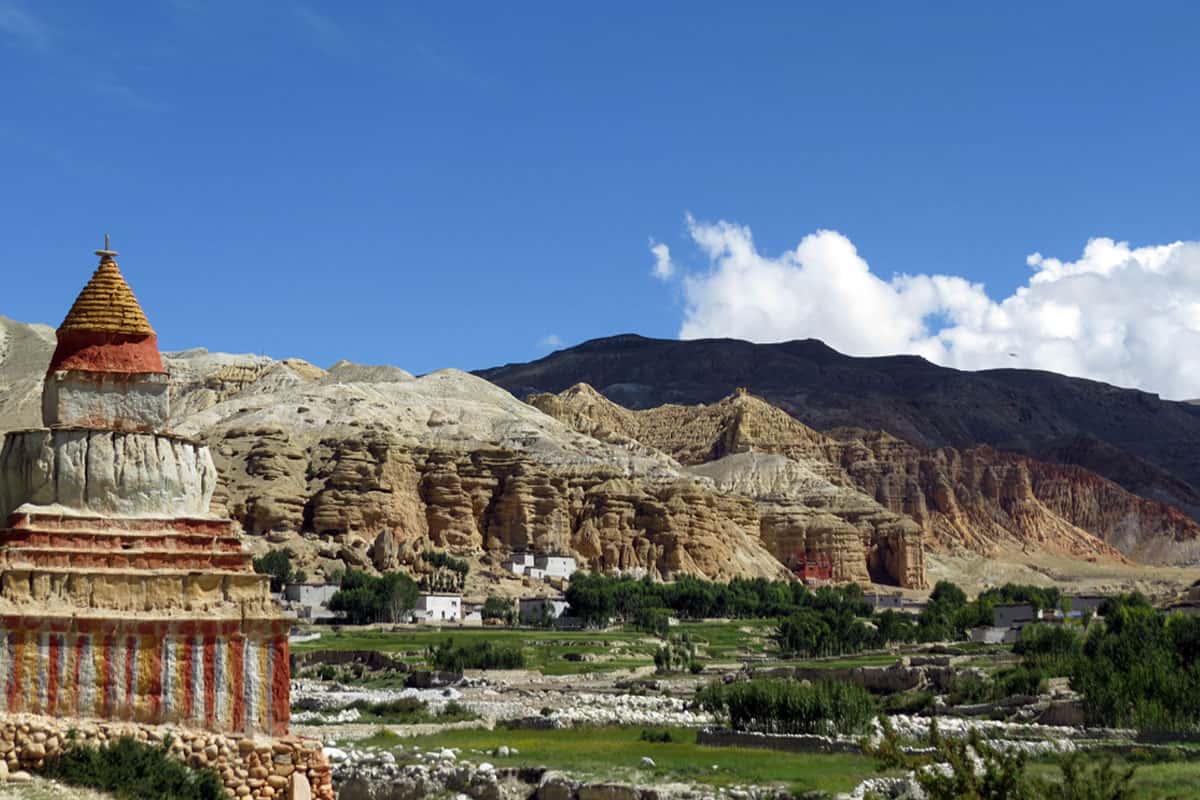
After breakfast in Kagbeni, show your ACAP and restricted area permits (RAP) at the police checkpoint; the trek from Kagbeni to Chele begins with departure from Kagbeni, following the eastern bank of the Kali Gandaki River and enjoying early views of Mount Nilgiri. After about 2.5 to 3 hours, the trail reaches Tangbe, a beautiful village known for narrow alleys, whitewashed houses, barley and buckwheat fields, apple orchards, and dramatic Mustang cliffs with ancient caves. From Tangbe, a 1.5 to 2-hour walk leads to Chhusang, located at the meeting point of two rivers and surrounded by striking red cliffs with ancient sky caves; this is a good place for lunch and rest. The final section is the most challenging, crossing a steel bridge over the Kali Gandaki and then climbing steeply up a rocky ridge before arriving in Chele, a Tibetan-style village perched above the canyon that marks a clear shift in landscape and culture.
Walking duration: 5-6 hours |
Altitude Gain: 660 m |
Altitude Loss: 460 m |
Accommodation: Lodge I
Meal: Breakfast, Lunch, Dinner
After breakfast in Chele, the trek begins with a choice between the road and the true trekking route, which crosses a dramatic suspension bridge over the Kali Gandaki canyon. From there, the trail leads to Ghyakar, a quiet traditional village surrounded by green fields of mustard and barley that contrast with the dry canyon walls. The route then climbs steeply to Dajori La Pass (3,735m), where prayer flags fly in strong winds and wide views of the Mustang plateau and distant sky caves open up. A gentle descent brings you to Samar, an oasis-like village with trees and streams, where trekkers usually stop for lunch and rest before continuing into a hotter, drier section. From Samar, the trail drops into the Syangboche Khola canyon toward Chungsi Cave, a sacred meditation site linked to Guru Rinpoche, known for its spiritual atmosphere and ancient formations inside. The final section is a tough uphill climb through steep, sandy switchbacks back to the plateau, eventually reaching Syangboche (3,800m), a small group of teahouses offering a peaceful, isolated setting with beautiful sunset views over the Mustang landscape.
Walking duration: 6-7 hours |
Altitude Gain: 1,300 m |
Altitude Loss: -570 m |
Accommodation: Lodge I
Meal: Breakfast, Lunch, Dinner
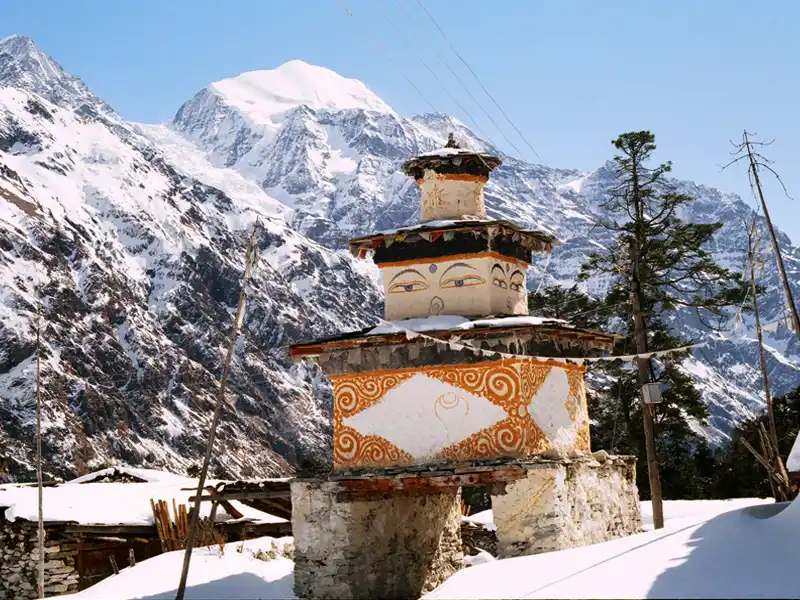
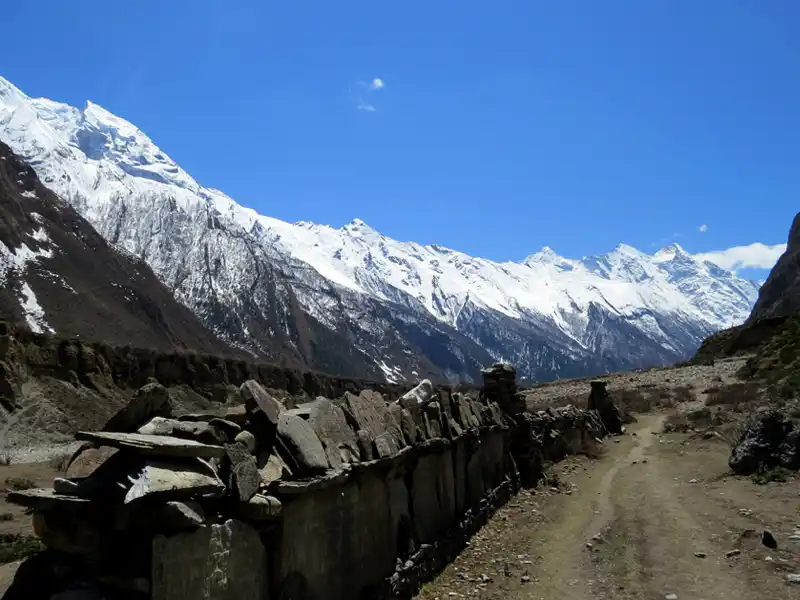
After breakfast in Syangboche, the trek begins with a choice of routes, but the scenic path descends into Ghiling, a traditional village set in a wide valley surrounded by barley fields and rugged mountains. Here, trekkers can visit the ancient Ghiling Gompa, known for its red walls, beautiful murals, and prayer flags that line the ridges. From Ghiling, the trail steadily climbs to Ghami La Pass (3,765m), where the vast Mustang landscape opens up, with distant views of Annapurna and Dhaulagiri and a cairn-marked summit that separates different regions of Upper Mustang. A steep descent leads into Ghami, a large settlement with closely packed whitewashed houses, a local school, and teahouses serving simple meals like Dal Bhat for energy. Leaving Ghami, the route passes the impressive 300-meter-long Mani Wall carved with Buddhist mantras before continuing toward Dhakmar (3,820m), where striking red cliffs rise dramatically above the village, glowing beautifully in the evening light and creating one of the most iconic views of the Mustang region.
Walking duration: 6-7 hours |
Altitude Gain: 790 m |
Altitude Loss: 760 m |
Accommodation: Lodge I
Meal: Breakfast, Lunch, Dinner
After breakfast in Dhakmar, the trek begins with a steep and challenging climb toward Mui La Pass (4,170 m), following the striking red cliffs that define the landscape and offering wide panoramic views of the high-altitude Mustang plateau. From the pass, the trail gently descends to Ghar Gompa (Lo Gekar), an ancient 8th-century monastery believed to be one of the oldest active Buddhist monasteries in the world, known for its sacred history, stone carvings, and deeply spiritual atmosphere. Continuing onward, the route passes through small highland settlements like Saukre and Marang, where trekkers may see yak caravans and local villagers working in the fields, giving a glimpse of traditional mountain life. The final descent leads into Tsarang (3,575m), where the impressive white Tsarang Palace and red Tsarang Monastery rise above the village, and large chortens and gates mark the entrance to this historic cultural center of Upper Mustang.
Walking duration: 4-5 hours |
Altitude Gain: 400 m |
Altitude Loss: 610 m |
Accommodation: Lodge I
Meal: Breakfast, Lunch, Dinner
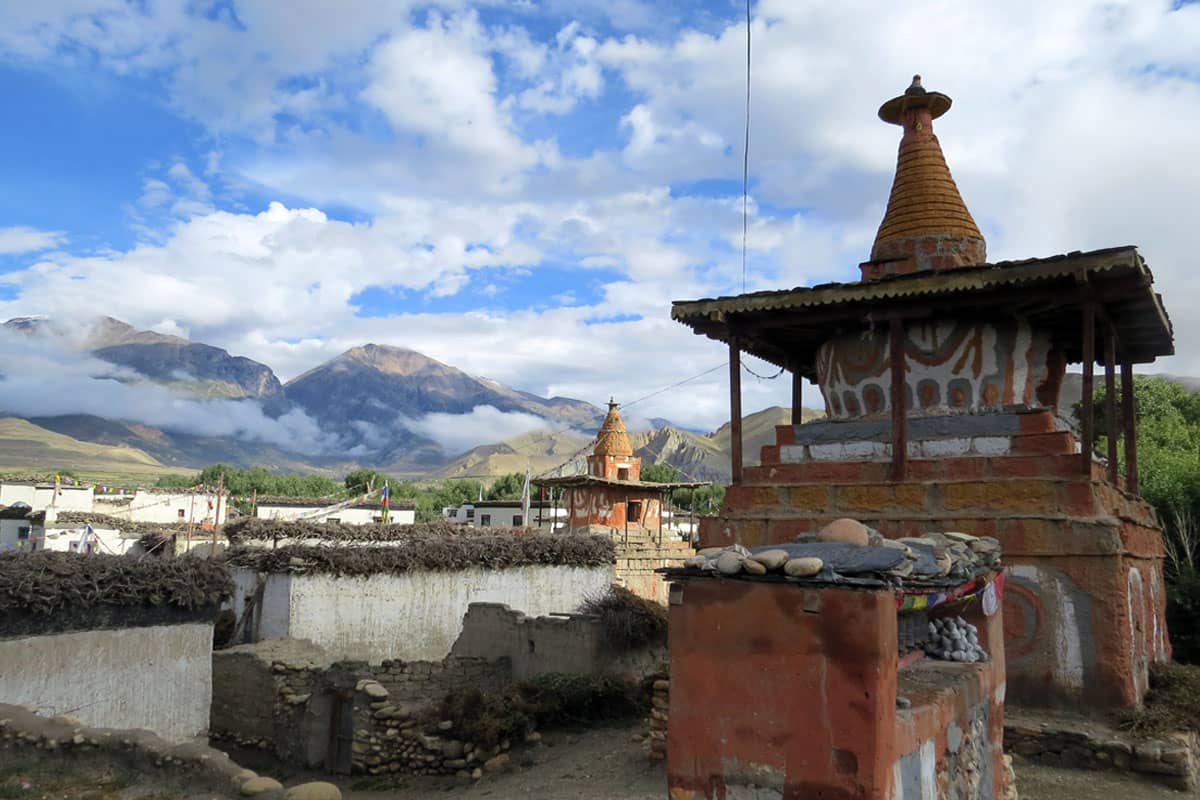
After breakfast in Charang, the trek begins by descending through fields and crossing the Charang Chu river, with a chance to visit the impressive Charang Gompa and the tall white Dzong fortress before heading north into the open, dry landscape of Upper Mustang. The trail then crosses a wide high desert plateau filled with red canyons, yellow cliffs, and ancient chortens, with strong afternoon winds making it important to start early. The route continues to the Lo-La Pass, where the hidden walled city of Lo-Manthang suddenly comes into view, surrounded by mountains and prayer flags in the wind. From the pass, a steady descent leads to the high walls of Lo-Manthang, and after arriving, you can explore its narrow streets, monasteries, and cultural landmarks inside this historic capital.
Walking duration: 4-5 hours |
Altitude Gain: 530 m |
Altitude Loss: 280 m |
Accommodation: Lodge I
Meal: Breakfast, Lunch, Dinner
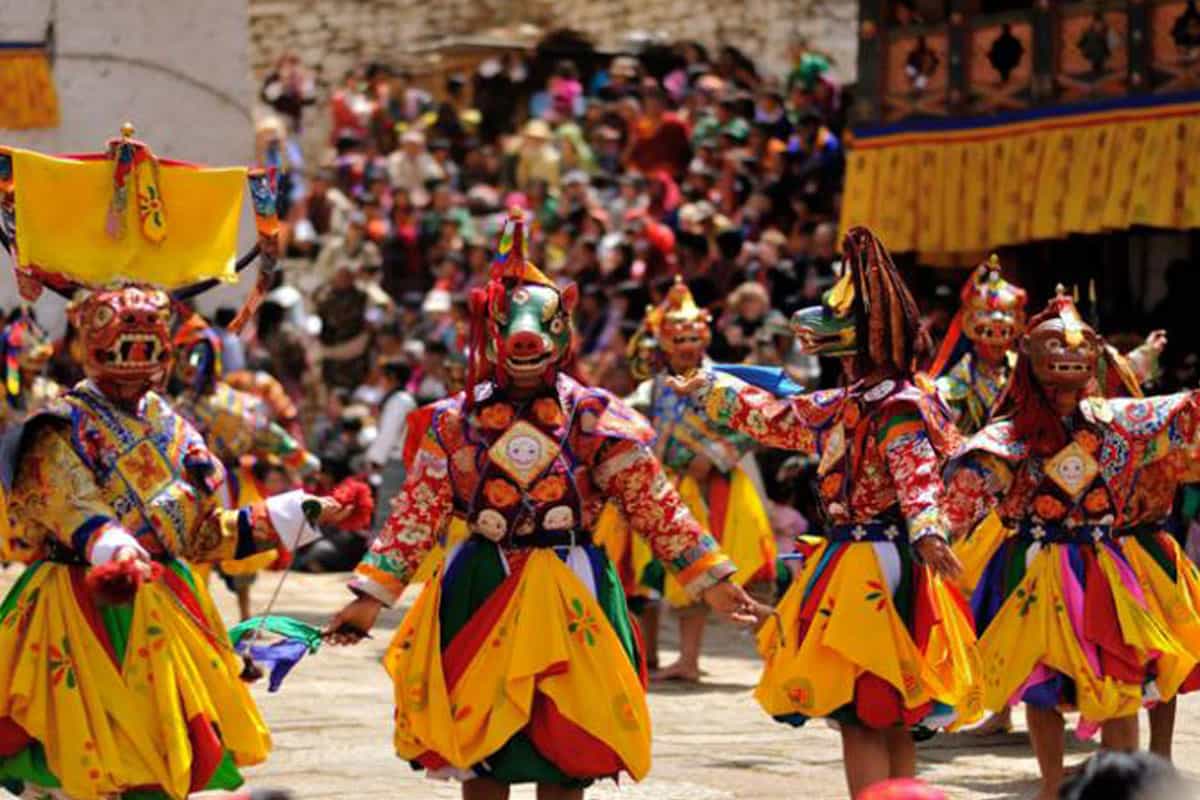
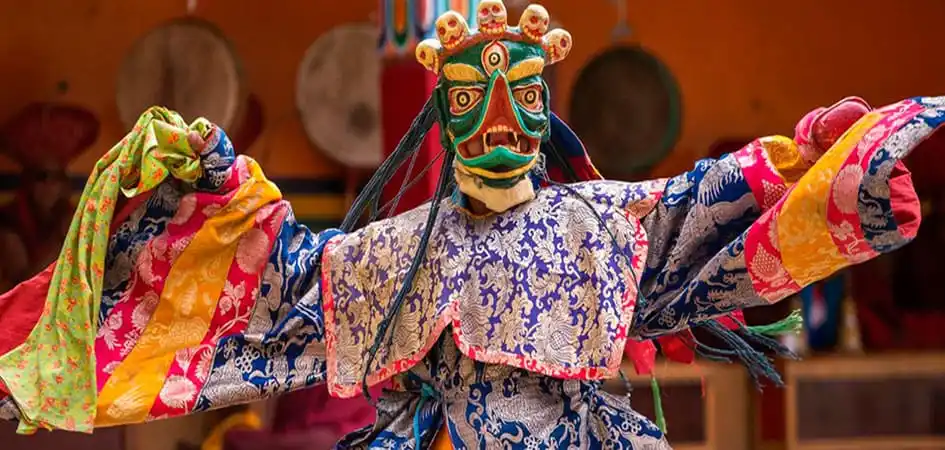
Today marks the beginning of the Tiji Festival in Lo-Manthang, and the day is spent enjoying the lively cultural celebrations. One of the main highlights is the traditional horse racing and the exciting tug-of-war, which bring energy and excitement to the festival. The atmosphere is especially vibrant, with locals dressed in colorful traditional attire and jewelry, while monks in robes and masked dancers perform sacred rituals and dances. The whole city comes alive with music, movement, and devotion, making it a truly unforgettable experience to witness this rich and colorful Himalayan celebration.
Accommodation: Lodge I
Meal: Breakfast, Lunch, Dinner
On the second day of the Tiji Festival in Lo-Manthang, we witness a powerful ceremonial performance featuring sacred masked dances performed by Tibetan lamas. These rituals are believed to drive away evil forces and negative spirits, bringing peace, protection, and purification to the village. The atmosphere is deeply spiritual, with many locals from surrounding areas gathering to take part in this important tradition of renewal and blessing. After the ceremony, there is time to explore the narrow alleyways, courtyards, and monasteries of Lo-Manthang, or even rent a horse to visit nearby villages and experience the unique lifestyle of Upper Mustang.
Accommodation: Lodge I
Meal: Breakfast, Lunch, Dinner
On the final day of the Tiji Festival, we hike up to Namgyal Gompa, a peaceful hilltop monastery that also serves as a traditional local court for the community. After exploring this important cultural site, we continue our journey to Tingkhar, the last village located northwest of Lo-Manthang, offering a closer look at the remote lifestyle of the region. In the evening, we return to Lo-Manthang to join the ongoing Tiji Festival celebrations, enjoying the final moments of this vibrant and meaningful cultural event.
Accommodation: Lodge I
Meal: Breakfast, Lunch, Dinner
After breakfast in Lo-Manthang, the trek begins by leaving the northern gate and crossing the dusty “Plain of Aspiration” before climbing up to Lo-La Pass (3,950m), where you get a final striking view of the walled city standing in the desert landscape. From the pass, the trail turns east into rougher terrain and begins a steep descent into deep canyon country with colorful cliffs shaped by erosion. At the bottom lies Dhi Gaon (3,390m), a small green oasis village surrounded by dry cliffs, where farmers grow barley and mustard using ancient irrigation systems, making it a good place for a rest. The route then follows the Mustang Khola riverbed, where trekkers may cross on bridges or stones and can find sacred Saligram fossils in the river while also facing strong afternoon winds through the canyon. Finally, a short but steep climb leads to Yara Village (3,650 m), a remote settlement built into the canyon edge, known for its stone houses and dramatic surroundings, with nearby cliffs filled with ancient sky caves once used as homes, burial sites, and meditation rooms.
Walking duration: 5-7 hours |
Altitude Gain: 560 m |
Altitude Loss: -780 m |
Accommodation: Lodge I
Meal: Breakfast, Lunch, Dinner
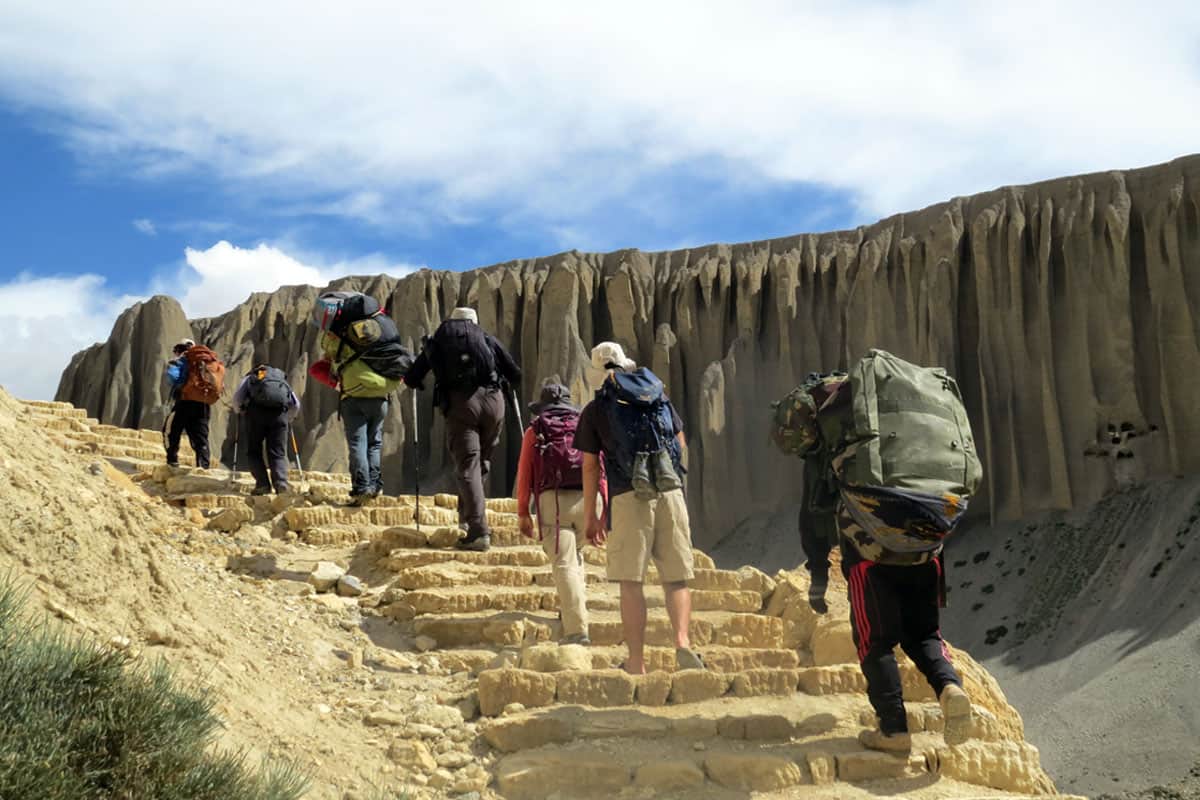
After breakfast in Yara, the trek begins heading northeast along the Puyung Khola valley, where the landscape is shaped by deep canyons and soft rock formations. Along the way, you pass tall “organ pipe” cliffs and ancient sky caves carved into the rock, some used as homes or meditation shelters. After about an hour, you reach Ghara, a small green village where locals farm barley and buckwheat using simple irrigation, showing the strong resilience of people living in this dry region. From Ghara, the trail becomes steeper with wide views of distant Himalayan peaks before reaching Luri Gompa, a monastery built directly into a red cliff. At the base is the lower monastery, while the main highlight is the upper cave temple, reached by a steep climb. Inside, you find a sacred stupa surrounded by beautiful old Buddhist murals and ceiling mandalas that have been preserved for centuries, along with small rooms holding ancient manuscripts, making Luri Gompa one of the most important cultural and spiritual sites in Upper Mustang.
Walking duration: 4-6 hours |
Altitude Gain: 380 m |
Altitude Loss: 380 m |
Accommodation: Lodge I
Meal: Breakfast, Lunch, Dinner
The trek starts by descending from Yara into a deep canyon toward the Dehyang Khola, where you may cross the river depending on conditions, surrounded by tall eroded rock formations that look like natural stone pillars. After crossing, the hardest part begins with a steep climb out of the canyon through dusty, sun-exposed switchbacks with little shade. Once you reach the top, the trail opens into a wide high plateau with vast silence and distant views of the Dhaulagiri and Annapurna mountains. The route continues across this exposed desert-like landscape, where strong Mustang winds can make walking difficult and you may spot blue sheep or other wildlife on the slopes. Finally, the trail drops dramatically into a valley where Tanggye appears far below as a green oasis, marked by long Mani walls and chortens at the village entrance, showing it as an important historic settlement in the region.
Walking duration: 7-9 hours |
Altitude Gain: 710 m |
Altitude Loss: 980 m |
Accommodation: Lodge I
Meal: Breakfast, Lunch, Dinner
After early morning breakfast in Tange, the day begins with a steep climb in the dark, gaining about 800 meters to reach a high plateau where the landscape opens into vast, empty desert terrain. From there, the trail continues toward the Paa Pass (4,210m), the highest point of the day, offering incredible panoramic views of the Dhaulagiri and Annapurna ranges across the deep Kali Gandaki valley. After crossing the pass, the route stays high along a long ridge with colorful rock formations, but strong winds can make walking challenging. Finally, a long and steep descent over loose and dusty trails leads down to Tetang, where you see the village built like a natural fortress with tightly packed houses. Near the bottom, you pass old salt mining areas before reaching Tetang, a traditional village known for its narrow alleys and unique culture, making it a rewarding end to one of the toughest trekking days in Upper Mustang.
Walking duration: 9-11 hours |
Altitude Gain: 1,200 m |
Altitude Loss: 1,490 m |
Accommodation: Lodge I
Meal: Breakfast, Lunch, Dinner
The trek starts from the deep canyon of Tetang with an early climb out of the village, following narrow paths through yellow and grey rock where ancient sky caves can still be seen along the valley walls. As the trail rises higher, it opens into wide alpine meadows where yaks and Himalayan goats are often grazed, and blue sheep can sometimes be spotted on the cliffs. The route continues up to Gyu La Pass (4,070 m), a challenging climb that rewards you with stunning views of both the Dhaulagiri and Annapurna mountain ranges to the south and the Mustang plateau to the north. After crossing the pass, the trail descends more gently through dry hills and small villages like Chhongur, showing a gradual shift from remote Upper Mustang to more connected Lower Mustang culture. The journey finally leads to Muktinath (3,760m), a sacred pilgrimage site famous for its 108 water spouts, eternal flame, and spiritual importance to both Hindus and Buddhists, making it a powerful and meaningful end point of the trek.
Walking duration: 6-8 hours |
Altitude Gain: 1,160 m |
Altitude Loss: 460 m |
Accommodation: Lodge I
Meal: Breakfast, Lunch, Dinner
After breakfast in Muktinath, the trek begins with a short descent to Jharkot, a beautiful old village built like a fortress with tightly packed houses and a striking monastery that overlooks the valley. Jharkot is also known for its traditional Sakya monastery and Amchi medical school, along with small orchards that add greenery to the otherwise dry landscape. From here, the trail climbs southward over open hills toward a ridge that offers wide views of Dhaulagiri, Tukuche Peak, and the deep Kali Gandaki Gorge. After enjoying the mountain panorama, the route descends into the quiet village of Lubra, one of the few Bon communities in Nepal, known for its unique monastery, ancient traditions, and peaceful setting among walnut trees. The final stretch follows the Panda Khola riverbed to the Kali Gandaki Valley, where strong afternoon winds are common, before reaching Jomsom, a lively town with lodges, bakeries, and modern facilities, marking the end of the remote trekking section.
Walking duration: 6-8 hours |
Altitude Gain: 320 m |
Altitude Loss: -1,330 m |
Accommodation: Lodge I
Meal: Breakfast, Lunch, Dinner
The flight from Jomsom to Pokhara begins with an early morning mountain flight, which is a thrilling experience as small aircraft fly through the Kali Gandaki Gorge, the deepest gorge in the world, between the massive peaks of Dhaulagiri and Annapurna. As the plane descends, the dry brown mountains of Mustang slowly change into green hills and finally into the lush, warm valley of Pokhara. After landing, you move to the Lakeside area, a peaceful and lively part of the city beside Phewa Lake, where you can relax, enjoy cafes, and recover with modern comforts after the trek. In the afternoon, you can explore major attractions like Phewa Lake with its Tal Barahi Temple in the middle; Devi’s Falls, where the water disappears underground; Gupteshwor Cave with its sacred Shiva shrine and view of the waterfall from below; and the World Peace Pagoda, which offers stunning views of the Annapurna range and Pokhara city. The day ends with good food, live music, and a relaxed atmosphere, making it a perfect and refreshing conclusion to the trekking journey.
Flight: 25 minutes |
Accommodation: Hotel l
Meal: Breakfast, Lunch
The drive from Pokhara to Kathmandu begins by leaving the peaceful lakeside and slowly climbing out of the valley, where you get a final view of Machhapuchhre and the Annapurna range behind you. The road crosses the Seti River gorge and passes through the terraced hills of Tanahun, home to Magar and Gurung communities and beautiful rice fields. Continuing onward, the route reaches Dumre, a key junction, before following the Marsyangdi River past hydropower projects and then arriving at Mugling, the main transport hub where roads from different parts of Nepal meet. From here, the highway runs along the dramatic Trishuli River gorge, where you may see white-water rafting, cable cars to Manakamana Temple, and roadside stalls selling famous river fish. The final section climbs steeply through Nagdhunga before opening into the Kathmandu Valley, where the landscape becomes crowded with houses and traffic, marking your arrival in the busy and historic capital city of Nepal.
Distance & Transfer: 200 km, 6-7 Hours |
Accommodation: Hotel l
Meal: Breakfast, Lunch
Today, we have a free day to explore the vibrant city of Kathmandu on our own. You may want to spend the day indulging in some souvenir shopping, wandering around the colorful streets and bazaars, or enjoying the local cuisine. You could also visit some of the popular tourist attractions in the city, such as Bhaktapur or Patan, which showcase Nepal's rich cultural and historical heritage. Alternatively, you could engage in other activities like hiking, biking, or adventure sports, or simply relax and rejuvenate in one of the city's many spas and wellness centers. Whatever you choose to do, make sure to soak up the unique sights, sounds, and flavors of this wonderful city.
Accommodation: Hotel l
Meal: Breakfast
Today, we will transfer to Kathmandu International Airport for our departure. After enjoying a hearty breakfast at the hotel, we will gather our belongings and make our way to the airport. We will ensure that we reach the airport well in time to complete all the necessary formalities and board our flight. Before we bid adieu to this enchanting country, take one last look at the breathtaking views of the Himalayas and take a moment to appreciate the warm hospitality and kindness of the Nepalese people. This marks the end of our tour, and we hope you had a memorable and enjoyable time in Nepal.
Meal: Breakfast
The Tiji Festival 2026 is scheduled to occur in Lo Manthang, Upper Mustang, from May 14 to May 16, 2026. The cost on the website applies to groups of 6–12 people. However, private trips for groups of two or more can be organized upon request. A group booking of 12 or more people can avail of a maximum discount with one free trip. Clients' travel date preferences can be accommodated, but the trek cost depends on factors such as group size, duration, accommodation type, and additional activities or services.
- Group Size: The cost of the trip will depend on the size of the group.
- Hotel Accommodation Category and Client's Budget: The cost may also vary based on the accommodation category and budget preference of the client.
- Itinerary Modification: Our trekking itinerary can be modified according to your time and requirements, and the cost will be adjusted accordingly.
- Additional Services: If you require additional services, the cost will be adjusted accordingly based on mutual understanding.
- Trekking Staff: The quantity of trekking guides, assistant guides, and additional porters required for the trip also affects the cost.
| Trip Dates | Trip Cost | Status | Inquiry |
| 5 May - 26 May 2026 | USD USD 2,350.00 Per Person | Available | Inquiry |
Cost Includes:
- Airport pick-up and drop-off services in private transportation before and after the trek.
- 4 nights of 3-star accommodation in Kathmandu in a twin room on a BB plan.
- Full-day city cultural tour in Kathmandu with City Tour Guide and all the entrance and monument fees.
- Land Transportation: Kathmandu - Pokhara and Pokhara - Kathmandu on private transportation.
- 2 nights of 3-star accommodation in Pokhara in a twin room on a BB plan.
- Domestic plane tickets: Pohara - Jomsom and Jomsom - Pokhara.
- Breakfast, Lunch, and Dinner during Mustang Trek.
- Best available twin-sharing room for accommodation during the trek.
- Experienced English-speaking, Assistant Guide for, a group of over 6 people and Porters (2:1), including their daily allowance, meal, and accommodation.
- Accidental and medical insurance for Nepalese team.
- Special permit of Mustang and Annapurna Conservation Area Project (ACAP) Entry Permit fee.
- Necessary documentation, all government taxes, and agency service charge.
Cost Excludes:
- Lunch and dinner in Kathmandu and Pokhara before and after Trek.
- International air ticket.
- Beverage and hard drinks and alcohol.
- Nepal entry visa fee and airport tax during the departure.
- Extra supporting staff, laundry, battery charge, and communication expenses.
- Personal expenses like tea, coffee, bar bill, drinking water, beverage, snacks, hot shower, etc.
- Travel and medical insurance, emergency evacuation/natural disaster, or personal reasons.
- In any case of natural calamities, mishaps, or anything beyond our control.
- Tips and gratitude for the members of the trekking or the tour.
Please feel free for any queries.
Q: Why is the Mustang Tiji Festival?
A: The Mustang Tiji Festival is a three-day celebration in Nepal's ancient Kingdom of Mustang, symbolizing the triumph of good over evil. Located in Mustang's stunning landscapes and rich cultural heritage, it features elaborate rituals, traditional dances, and captivating performances. Participants wear vibrant costumes and ornate masks, creating a vibrant kaleidoscope of colors. This festival showcases community spirit, religious devotion, and cultural preservation, attracting visitors worldwide to witness this unique and enchanting celebration.
Q: When is the Mustang Tiji Festival in 2026?
A: The Mustang Tiji Festival will be held in Lo Manthang, Nepal, from May 14th to May 16th, 2026. This festival is renowned for its unique culture and breathtaking landscapes, offering visitors the opportunity to experience the ancient city's rich traditions and captivating rituals.
Q: What is the highlight of the Mustang Tiji Festival?
A: The Mustang Tiji Festival is a bright and vivid festival that includes a range of cultural and religious activities. Locals participate in traditional festivities, such as spellbinding masked dances and enchanting music performances. The festival also features thrilling horse races and other entertaining activities, all of which add to the festive mood. Each activity represents the region's rich cultural past, making the Tiji Festival an engaging and immersive experience for both residents and tourists.
Q: How can I attend the Mustang Tiji Festival?
A: To attend the Mustang Tiji Festival, you must purchase a travel package from a licensed tour and trekking company. These packages usually include transportation, lodging, and other logistical preparations, resulting in a seamless and pleasurable vacation. The tour operator will manage all of the arrangements, enabling you to completely immerse yourself in the vivid celebrations and cultural richness of the Tiji Festival without exerting any effort.
Q: What is the cost of attending the Mustang Tiji Festival?
A: The cost of attending the Mustang Tiji Festival in 2026 varies depending on several factors, including the tour operator, the type of tour package chosen, the duration of the tour, and any additional activities or amenities included in the package. However, most tour packages typically cover transportation to and from the event, accommodations, meals, and other festival-related expenses. To obtain precise pricing and package information, it is advisable to contact tour operators directly.
Q: What is the weather like during the Mustang Tiji Festival?
A: During the Mustang Tiji Festival, the weather is typically moderate and dry, providing a fantastic backdrop for activities. However, it is important to note that temperatures can fluctuate throughout the day and vary based on the region's altitude. Therefore, it's best to come prepared with layers of warm clothing, especially for cool evenings. It is also advisable to bring rain gear, as the weather in mountainous areas like Mustang can be unpredictable, with brief showers or sudden changes in weather patterns being common. Attendees who are ready for various weather conditions will be able to fully enjoy the vibrant and lively atmosphere of the Tiji Festival without any discomfort.
Q: How difficult is the Mustang Tiji Festival Trek?
A: The Mustang Tiji Festival Trek is a moderately challenging journey that demands physical fitness and endurance. It involves navigating rugged terrain, steep ascents, and long periods of walking. The high altitude of the region, exceeding 4,000 meters, adds complexity and requires proper acclimatization to prevent altitude sickness. Despite these challenges, the trek offers breathtaking landscapes such as the Himalayas and the beautiful barren region of Mustang. It also offers unique cultural experiences, including exploring ancient Buddhist monasteries and interacting with local communities. Despite the physical exertion, the awe-inspiring scenery and cultural experiences make it a profoundly rewarding adventure.
Q: Do I need trekking permits for the Mustang Tiji Festival Trek?
A: Trekking in the Upper Mustang requires obtaining several permits due to its restricted and remote location. The permits that are typically required for the Upper Mustang Trek are as follows:
Annapurna Conservation Area Permit (ACAP): This permit is mandatory for all trekkers entering the Annapurna Conservation Area, which includes Upper Mustang. The ACAP aims to conserve the natural and cultural heritage of the region.
Restricted Area Permit: As the Upper Mustang is considered a restricted area, a special permit called the Restricted Area Permit (RAP) is required. The RAP is only valid for ten days and for a limited amount of US$500 per person, according to the Kathmandu Department of Immigration. The cost is US$50 per day if the trek exceeds 10 days within the designated Upper Mustang area.
TIMS Card: The Trekker's Information Management System (TIMS) card is necessary for all trekkers in Nepal. There are two types of TIMS cards: one for independent trekkers and another for trekkers associated with a registered trekking agency. The TIMS card helps ensure the safety and security of trekkers.
Please note that trekking permits and regulations may change. It's advisable to check with a reliable trekking agency or the Department of Immigration in Nepal for the most up-to-date information about permits and procedures. Additionally, it's recommended to hire a licensed trekking guide who can help you obtain the necessary permits and provide valuable support throughout the trek.

 Mustang Tiji Festival Trek 2026