Manaslu Rupina La Pass Trek


Rupina La Pass Trek – Hidden Gem of the Lower Manaslu Region, Nepal

The Rupina La Pass Trek is a hidden treasure that can be found in the wilderness of Nepal. It is in the western part of the Lower Manaslu region. This off-the-beaten-path trekking route provides a unique opportunity to experience the Himalayas in a remote setting while also taking in the breathtaking natural beauty and rich cultural heritage.


A Challenging and Rewarding Himalayan Trek

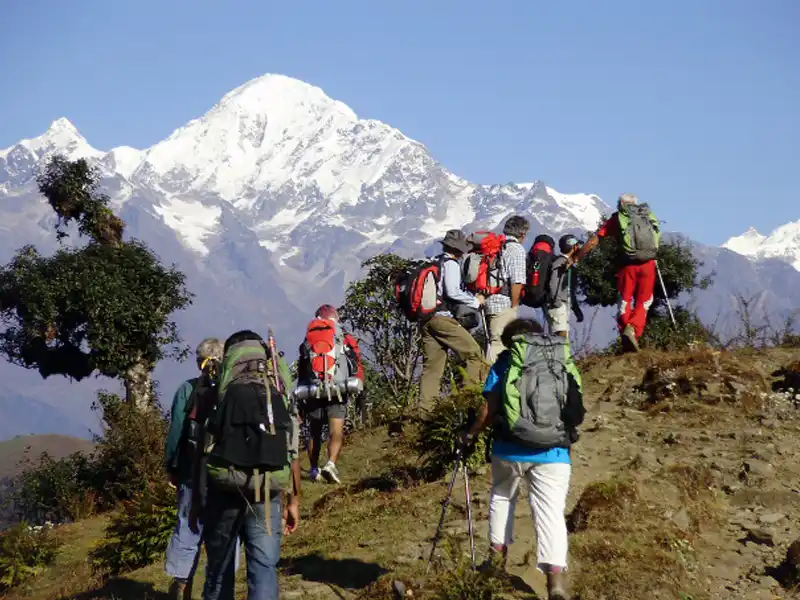
The Rupina La Trek is a difficult and less-traveled path that requires a lot of physical fitness, stamina, and the ability to deal with quickly changing weather on the mountain. This trek is best for experienced trekkers who want to explore the Himalayas in a remote area. Along the way, trekkers are rewarded with breathtaking views of famous Himalayan peaks, such as Mount Manaslu, Himalchuli, and the Ganesh Himal range. With every step, I feel awe, gratitude, and a deep connection to the Himalayas.


Culture and Biodiversity in Manaslu Conservation Area

The Manaslu Rupina La Pass Trek goes through the Manaslu Conservation Area, which is a protected area with many different plants and animals, including over 110 species of birds and animals. The Gurung community, which is friendly and welcoming, lives in this area. This gives trekkers a chance to experience real Himalayan culture. Travelers can meet and speak with Gurung people, learn about their customs, and get a better understanding of how they live. This makes the trip both meaningful and culturally rich.


Remote Adventure in Lower Manaslu

The Rupina La Pass Trek Nepal is one of the lower-altitude Himalayan passes, but it is still a tough and exciting hike. The route has long days of hiking, crossing rivers, steep climbs, and rough ground, especially in the spring and fall, which are the best times to go trekking. This hard trail is perfect for trekkers who have done high-altitude trekking before and want to find a less crowded and commercialized route in Nepal than the ones that are well-known.


Unforgettable Himalayan Experience

The Rupina La Pass Trekking route takes you through beautiful, untouched areas, gives you a spiritual feeling of the Himalayas, and lets you meet people from different cultures. Trekkers enjoy beautiful views, quiet places, and experiences that change their lives and stay with them long after the trek is over. This secret Himalayan path in Nepal offers a truly unique experience, from breathtaking mountain views to real village life.

Rupina La Pass Trek Highlights


  • Remote Off-the-Beaten-Path Adventure: The Rupina La Pass Trek is a secluded and under-explored route in the Lower Manaslu region that is ideal for trekkers who are seeking a raw Himalayan wilderness that is less crowded than the usual trails.
  • Panoramic Views of Iconic Himalayan Peaks: Savor the breathtaking beauty of the Ganesh Himal, Himalchuli, and Mount Manaslu.
  • Crossing the Remote Rupina La Pass: Immerse yourself in the excitement of traversing the Rupina La Pass, a challenging high pass in Nepal that is less frequently traveled. This pass offers dramatic landscapes and a genuine sense of Himalayan adventure.
  • Rich Biodiversity in Protected Area: Explore the stunning Manaslu Conservation Area, which is home to a variety of flora and fauna, including rare Himalayan wildlife and over 110 bird species.
  • Authentic Gurung Culture and Villages: Engage with the warm and welcoming Gurung community, gaining insight into their traditional lifestyle, hospitality, and rich Himalayan heritage. 
  • Unspoiled Natural Beauty: The trek traverses pristine forests, alpine meadows, rivers, and waterfalls, with landscapes that are constantly evolving.
  • Challenging Yet Rewarding Route: The trek is suitable for experienced trekkers who are seeking a physically demanding Himalayan journey, as it includes long hiking days, river crossings, and steep ascents. 
  • Peaceful and Less-Crowded Trails: Rupina La is different from other popular trekking routes in Nepal because it is quiet, private, and lets you connect with nature on a deeper level.
  • Best for Spring and Autumn Trekking: The best times to go trekking are when the weather is stable, the skies are clear, and the mountains are easy to see. 

Trip Itinerary

Day 01: Arrive in Kathmandu

Upon your arrival in Kathmandu, Nepal, a friendly representative from Rupina La Pass Trek with Manaslu Trek will greet you at the airport and escort you to your hotel. This marks the beginning of your Manaslu Circuit Trek adventure, offering a smooth and comfortable start to your journey in the Himalayan region.

In the evening, we host a special welcome dinner featuring authentic Nepalese cuisine, accompanied by a refreshing reception drink. This welcome evening also provides an opportunity to meet your fellow trekkers, discuss the Rupina La Pass Trek itinerary, and receive essential tips for trekking in the Himalayas, including acclimatization, packing, and safety advice. Starting your journey in Kathmandu allows you to ease into the adventure while enjoying the city’s vibrant culture and setting the stage for your unforgettable Himalayan trekking experience.

Transfer: 30-45 min | Accommodation: Hotel | Meal: Welcome Dinner

Day 02: Full day City Tour in Kathmandu

Today, explore the rich culture, history, and heritage of Kathmandu Valley on this full-day city tour before your Manaslu Circuit Trek. The tour takes you to some of Kathmandu's most famous UNESCO World Heritage Sites, offering a perfect introduction to Nepalese art, architecture, and traditions with our professional English-speaking City Tour Guide:

  • SWOYAMBHUNATH , also known as the Monkey Temple, is one of Kathmandu Valley’s most iconic Buddhist stupas. Perched on a hilltop, it offers panoramic views of Kathmandu city and features ancient shrines, prayer wheels, and intricate carvings. The site is a spiritual and cultural landmark, attracting both pilgrims and tourists.
  • KATHMANDU DURBAR SQUARE is a UNESCO World Heritage Site and the historic heart of Kathmandu City. Known for its ancient palaces, temples, courtyards, and intricate wood carvings, it reflects Nepalese art, culture, and architecture. A visit to this iconic square offers a glimpse into the royal history of Nepal.
  • BOUDHANATH STUPA is one of the largest and most important Buddhist stupas in Nepal and a UNESCO World Heritage Site. Known for its massive white dome, colorful prayer flags, and iconic Buddha eyes, it serves as a major center for Tibetan Buddhism. Visiting Boudhanath provides an immersive cultural and spiritual experience.
  • PASHUPATINATH is one of Nepal’s most sacred Hindu temples, dedicated to Lord Shiva and located on the banks of the Bagmati River in Kathmandu. Famous for its intricate pagoda-style architecture, cremation ghats, and spiritual rituals, it offers visitors a deep cultural and religious experience.

Our knowledgeable guide will tell you interesting things about the religious, historical, and architectural importance of each landmark. Kathmandu is a unique city with a rich culture and a spiritual atmosphere that will make your city tour an interesting and memorable way to learn about Nepalese heritage.

Sightseeing: 7-8 Hours | Accommodation: Hotel | Meal: Breakfast

Day 03: By Private Transportation: Kathmandu - Gorkha (1,135m)

After breakfast in Kathmandu, take a scenic drive of about 144 km to Gorkha Bazaar, which usually takes 5 to 7 hours by private vehicle, depending on traffic. The journey follows the Prithvi Highway, passing towns like Naubise, Malekhu, and Mugling, and running along the sparkling Trishuli River. At Malekhu, stop for a fresh cup of tea, coffee, and light food and watch whitewater rafters on the riverbanks—a classic roadside experience. From Abu Khaireni, leave the main highway toward Pokhara and climb the last 24 km uphill through terraced farmland, forests, and traditional Newari and Magar villages, gradually entering the cooler mountain region. Upon arrival in Gorkha Bazaar, check in at your hotel and enjoy a refreshing cup of tea or coffee to recharge before the afternoon climb.

In the late afternoon, hike up to Gorkha Durbar, the ancestral palace of the Shah dynasty and birthplace of King Prithvi Narayan Shah. The climb involves approximately 1,500 stone steps, shaded by ancient trees and lined with small shrines. The Durbar is a beautiful example of Newari architecture, with intricate wood carvings, red-brick walls, and a mix of fort, palace, and temple. Visit the sacred Kalika Temple and Gorakhnath Cave, where the sage once guided the young king. As the sun sets, enjoy panoramic views of Boudha Himal, Himalchuli, Langtang, and the Annapurna range, with the Daraundi River winding below and the bazaar lights sparkling.

Transfer: 140km, 5-6 hours |  Accommodation: Hotel l Meal: Breakfast, Lunch, Dinner

Day 04: By Jeep: Gorkha - Barpak (1,945m). Trek to Gupsi Pakha (2,800m)

After breakfast in Gorkha, the drive starts by going down from the historic Gorkha ridge toward the lower parts of the district. Along the way, we pass local spots like 13 Kilo and 12 Kilo, where the city influence fades, the air gets warmer, and the plants become more tropical. At Chepetar, the land flattens into wide, green plains with paddy fields and traditional thatched houses, while the turquoise Daraudi Khola flows beside the road. Baluwa is an important stop and often the last place to find a tea shop before the road climbs steeply. After crossing the river near Baluwa, the road winds upward into the hills with sharp turns and cliffs, reaching Rangrung, where the air is cooler, the pine scent fills the air, and the Daraudi River winds below. Passing Mandre, the local communities change from Brahmin and Chhetri settlements to the stone-and-wood houses of Gurung people, with small terrace farms on the mountainsides. Finally, rounding the last bend, Barpak (1,950 m) comes into view, a large village with hundreds of houses clinging to the slope like a fortress. It is known as the home of the Ghale Kings and a recruiting place for Gurkha soldiers, and it was also the epicenter of the 2015 earthquake.

After a hearty lunch in the traditional stone-paved village of Barpak (1,900m), the scenic trek to Laprak begins, taking around 4–6 hours and combining rich Gurung culture with breathtaking Himalayan landscapes. The trail climbs steadily along a well-maintained stone staircase, offering sweeping views of the Daraundi Valley, scattered hillside settlements, and distant snow-capped peaks. After about 3–4 hours, you reach Momche Danda (2,950m), a spectacular ridge known for its open pastures, grazing sheep, and stunning 360-degree panoramas of the surrounding mountains. From here, the trail continues through lush rhododendron and pine forests—bursting with vibrant colors in spring or lightly dusted with snow in winter—while revealing magnificent views of the Annapurna, Manaslu, Buddha Himal, Shringi Himal, Ganesh Himal, and Langtang ranges. A further 30 minutes to 1 hour of trekking brings you to Gupsi Pakha, a peaceful highland settlement and new model village rebuilt after the 2015 Nepal earthquake with support from NRNA, offering a unique blend of resilience, culture, and incredible mountain scenery.

Transfer: 70 km, 3-4 Hours | Trekking: 4-6 Hours | Distance: 5 km | Altitude Gain: 930 m | Altitude Loss: 100 m | Accommodation: Lodge I Meals: Breakfast, Lunch, Dinner

Day 05: Gupsi Pakha to Humche Dada (3,000m)

After breakfast in Gupsi Pakha, the trek begins with a steady climb through a beautiful forest of rhododendron and oak trees, especially colorful in spring when red and pink flowers bloom. As you walk, you may hear birds and even spot the bright Himalayan monal. After about two hours, the forest opens up to narrow ridges, where the trail becomes more dramatic with wide mountain views of Baudha Himal (6,672m) and Peak 29 (Ngadi Chuli) to the north. The path can be narrow and a bit slippery in fog, so careful walking is needed. The final part of the trek follows gentle highland pastures, where the air feels thinner and you may see simple stone shelters used by local shepherds. Upon reaching Humche Dada, you are rewarded with a beautiful ridge campsite offering amazing panoramic views of Baudha Himal, Sringi Himal, Ganesh Himal, and even the distant Annapurna range, making it a perfect mix of nature, peace, and high-mountain adventure.

Trekking: 3-4 Hours | Distance: 8 km | Altitude Gain: 570 m | Altitude Loss: 170 m | Accommodation: Tent l Meals: Breakfast, Lunch, Dinner

Day 06: Humche Dada to Ruse Kharka (2,835m)

Leaving the campsite at Humche Dada, the day begins with a stunning ridge walk offering clear views of Ganesh Himal to the east and the towering Baudha Himal ahead, though the exposed trail can be cold and windy in the early morning. The path then descends steeply into a more remote and wild section, following narrow, sometimes faint trails through tall grass and bamboo, with loose rocks requiring careful footing. As you descend, the landscape changes from open alpine terrain to dense forest, passing through juniper, bamboo, and rhododendron. Along the way, you cross several small streams that feed into the Daraudi River, which may need extra care depending on the season. The trek continues through quiet valleys and green surroundings, where you might see grazing areas and simple shelters used by local herders. Upon reaching Ruse Kharka (2,835m), you arrive at a peaceful pasture surrounded by wilderness, with a few stone huts and a calm atmosphere, making it a perfect spot for an authentic and remote camping experience in the Himalayas.

Trekking: 4-5 Hours | Distance: 7 km | Altitude Gain: 430 m | Altitude Loss: 390 m | Accommodation: Tent l Meals: Breakfast, Lunch, Dinner

Day 07: Ruse Kharka to Rupina La Phedi (3825m)

After breakfast in Ruse Kharka, the trek begins with a steady climb out of the basin, passing through high-altitude vegetation where tall Himalayan fir and twisted rhododendron trees slowly give way to dwarf juniper and hardy alpine shrubs. The trail can be damp and muddy in places as it follows the upper streams that feed the Buri Gandaki River. As you rise above the treeline, the landscape opens into a wide alpine tundra surrounded by dramatic mountain scenery, with the massive south faces of Baudha Himal (6,672m) and Ngadi Chuli (7,871m) dominating the skyline. The path becomes more rugged and rocky as it crosses old glacial moraines, often marked with stone cairns that help guide the way in misty conditions. After descending to the small stream of Sumrung Khola and climbing again, you reach Rupina La Phedi (3,825m), the base camp below the pass. This windswept, rocky campsite sits at the head of a glacial valley and offers raw Himalayan beauty, where trekkers set up tents carefully against the strong mountain winds and enjoy a peaceful night surrounded by dramatic high-altitude landscapes.

Walk: 5-6 hours |  Distance: 7 km | Altitude Gain: 910 m |  Altitude Loss: 130 m | Accommodation: Tent l Meals: Breakfast, Lunch, Dinner

Day 08: Cross Rupina La Pass (4,610m). Trek to Thadepuk (3,600m)

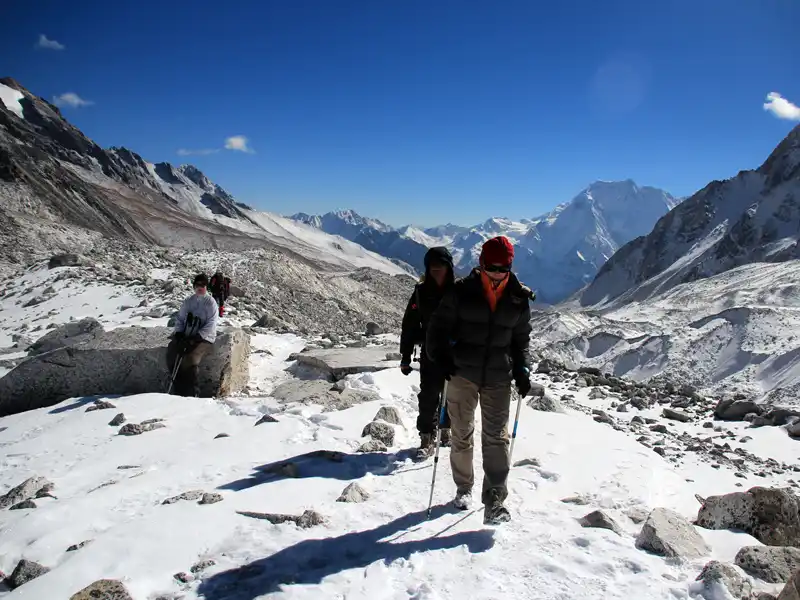
The day starts very early, around 4:00 AM, to cross Rupina La (4,610m) before strong winds and soft snow make the descent more difficult. From the Phedi, the climb is steep and challenging, with loose rocks, glacial debris, and often hard snow or ice, so microspikes or crampons can be helpful. The trail is not always clear, marked only by small stone cairns, and you may need to scramble over large boulders as you gain height. The final section is the steepest, leading to the pass decorated with prayer flags, where you are rewarded with incredible views of Baudha Himal, surrounding glaciers, and distant peaks of the Sringi, Khutang, and Ganesh Himal ranges. The descent is tough and requires caution, starting with steep snowy or icy slopes, followed by loose rocky terrain and a narrow valley with high cliffs and hanging glaciers. One steep scree section is especially demanding. After the difficult descent, the trail becomes easier as it follows the edge of the Chuling Glacier, crossing small streams and alpine wetlands on the way to Thadepuk. This high-altitude pasture offers a simple but beautiful campsite, where you can rest and enjoy the wild Himalayan surroundings, and with some luck, spot blue sheep on the nearby cliffs.

Trekking: 6-7 Hours |  Distance: 6 km |  Altitude Gain: 710 m |  Altitude Loss: 730 m | Accommodation: Tent l Meal: Breakfast, Lunch, Dinner

Day 09: Thadepuk to John kharka (3,100m)

Leaving the open meadows of Thadepuk, the trail follows the glacier’s side moraine, with early morning light shining on the huge ice walls of Baudha Himal behind you. The path is rough and unstable in places, with loose rocks and small streams that must be crossed carefully. One of the hardest parts of the day is the steep descent toward Reul Khola, where the trail is often unclear, and you may need to walk along the riverbed over large boulders or climb higher along the valley sides to avoid narrow sections. As you drop below 3,500m, the scenery slowly changes from cold alpine terrain to green forest, with juniper giving way to thicker shrubs, birch, fir, and beautiful rhododendron and hemlock forests. This area is also home to wildlife such as musk deer and Himalayan tahr. The trail continues east toward the Budhi Gandaki valley, with increasing views of Ganesh Himal and glimpses of glaciers like Rupina La and Baudha Himal along the way. After a mix of ups and downs, the day ends at John Kharka (Zakbathan), a peaceful grassy campsite near the meeting point of Reul Khola and smaller streams, where the sound of flowing water and forest creates a calm and relaxing place to rest after a challenging day in the mountains.

Trekking: 6-7 Hours | Distance: 10 km |  Altitude Gain: 130 m |  Altitude Loss: 940 m | Accommodation: Tent l Meals: Breakfast, Lunch, Dinner

Day 10: John Kharka to Nyak (2280m)

After breakfast in John Kharka, the trail descends along the western bank of the Reul Khola through one of the most beautiful and untouched forest sections in the Gorkha region. Tall Himalayan hemlock, fir, and maple trees form a dense green canopy, while rhododendron, moss, and pine needles cover the forest floor, creating a peaceful atmosphere with the sound of the river flowing below. As the valley becomes narrower, the trail climbs higher along steep cliffs and narrow paths carved into the hillside, with dramatic drop-offs and wide views of where the turquoise Reul Khola meets the grey waters of the Buri Gandaki, marking the end of the remote Rupina La wilderness.

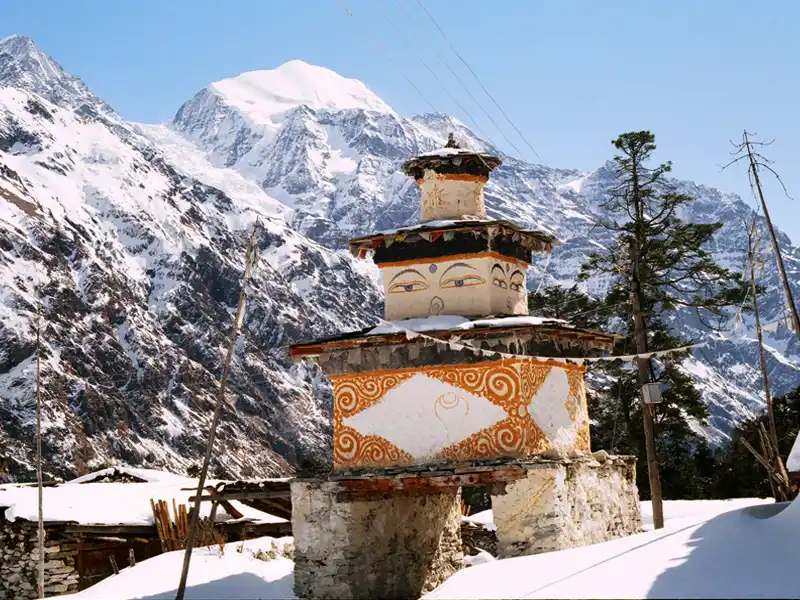
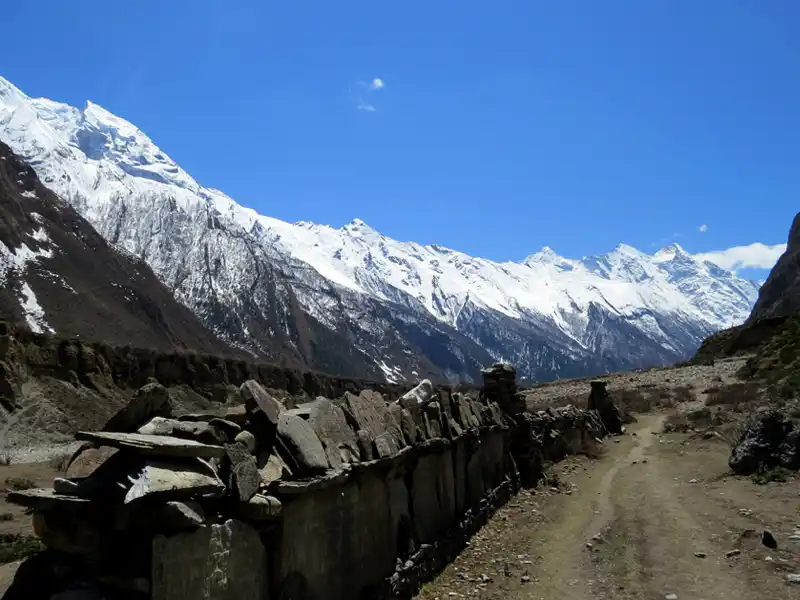
After a steep descent, the trail joins the main Manaslu Circuit route near suspension bridges over the Buri Gandaki, where the return to busier trekking paths feels very different after days of isolation. From the riverbank, a strong 45–60-minute climb leads up to Nyak, a traditional Gurung village sitting on a wide mountain terrace. The village is known for its stone houses, wooden roofs, terraced fields of barley, buckwheat, and potatoes, and cultural landmarks like mani walls and chortens, showing the transition from lower Gurung culture to the Tibetan-influenced heritage of the upper Manaslu region.

Trekking: 7-9 Hours | Distance: 15 km | Altitude Gain: 580 m |  Altitude Loss: 2,370 m | Accommodation: Lodge I Meals: Breakfast, Lunch, Dinner

Day 11: Nyak to Prok (2370m)

After breakfast in Nyak, the trek begins with a steep descent through rocky switchbacks down to the Buri Gandaki River. This section follows one of the narrowest parts of the valley, where the trail is often cut into cliffs or supported by wooden beams, with the river rushing far below. Near Pewa, a small riverside settlement, the trail splits; instead of continuing toward Deng, you cross to the western bank to start the climb toward the hidden Prok plateau.

From the river, the trail enters a quiet forest of Himalayan blue pine and hemlock, filled with fresh mountain air, waterfalls, and birdlife, with a chance to see langur monkeys along the way. The final section is a steady uphill climb to Prok, where traditional stone gates (Kani) and carved mani walls mark the village entrance and are passed clockwise as a sign of respect. Prok is a peaceful traditional village set on a wide plateau, surrounded by fields of barley, buckwheat, and potatoes, and offering beautiful sunset views of Sringi Himal (7,161 m), which often glows golden and orange in the evening light.

Trekking: 5-6 Hours |  Distance: 14 km |  Altitude Gain: 1,020 m |  Altitude Loss: 900 m | Accommodation: Lodge I Meals: Breakfast, Lunch, Dinner

Day 12: Prok to Lho (3180m)

After breakfast in Prok, the trail descends through moss-covered forests toward the Buri Gandaki River, passing a narrow shaded gorge filled with ferns and hanging moss. A suspension bridge then crosses the river back to the eastern bank, offering a dramatic view of Prok perched high above the valley. From here, the trail climbs steadily to Namrung (2,630m), a key checkpoint where permits are checked. Namrung is a traditional stone village with colorful entrance gates (kanis), designed to protect against cold winds, and it offers views of Sringi Himal behind and the first clear sight of the Manaslu range ahead.

Beyond Namrung, the valley opens up and becomes more fertile as you pass through Lihi (2,900m) and Sho (3,000m), villages known for terrace farming, chortens, and long lines of Mani stones carved with “Om Mani Padme Hum.” Between these villages, you can enjoy views of Ngadi Chuli (Peak 29) and the lower slopes of Manaslu, while passing locals in traditional chuba clothing and seasonal orchards of apples and apricots. The final section climbs through pine forest to Lho (3,180m), a beautiful village with one of the best views of Mount Manaslu (8,163m), rising above the hillside monastery. Ribung Monastery, located above the village, is its spiritual heart, where the sound of chanting and cymbals often fills the valley in the evening.

Trekking: 7-9 Hours | Distance: 18 km |  Altitude Gain: 1,160 m |  Altitude Loss: 400 m | Accommodation: Lodge l Meals: Breakfast, Lunch, Dinner

Day 13: Lho - Samagaon (3,525m)

After breakfast in Lho, the day begins with an early sunrise view of Mount Manaslu, where the first light turns the peaks golden while monks at Ribung Monastery perform their morning prayers. The trail then leaves Lho and passes through rhododendron and pine forests, crossing a small stream before reaching the ridge village of Shyala (3,500m), which offers wide panoramic views of Manaslu, Himal Chuli, Ngadi Chuli, and Ganesh Himal in the distance. From Shyala, there is an optional and challenging side trip toward the Pungyen Glacier and Pungyen Gompa, where the landscape becomes completely alpine with no trees, only rocks, glaciers, and dramatic views of Manaslu’s ice walls; the rebuilt monastery here is quiet and powerful, with occasional sounds of ice breaking from the glacier. After returning to the main trail, you continue across open alpine terrain and grazing areas, passing the junction for the Pungyen route before gradually descending into the wide valley floor. The route then leads into Samagaon through long mani walls and cultivated fields of barley and potatoes. Samagaon is the cultural heart of the region, a large traditional Tibetan-influenced village with stone houses, yaks, and a strong Buddhist heritage, where people maintain trade links with Tibet over nearby high passes and continue traditional weaving and farming. It is an important place for rest and acclimatization, and you can spend the afternoon exploring the village, old monasteries, and surrounding viewpoints.

Trekking: 7-8 Hours |  Distance: 17 km |  Altitude Gain: 970 m |  Altitude Loss: 630 m | Accommodation: Lodge l Meals: Breakfast, Lunch, Dinner

Day 14: Acclimatization day

Today is an acclimatization day in Samagaon, giving us time to rest, adjust to the altitude, and prepare for the days ahead. We have two great options: a short and easy hike to Birendra Tal (3,691 m) or a more challenging trek to Manaslu Base Camp (4,800 m). The walk to Birendra Tal takes about 45 minutes to an hour on a mostly flat trail, passing mani walls and chortens along the Manaslu Glacier, leading to a peaceful, emerald-colored lake surrounded by ice cliffs, where you may hear distant avalanches. Many people return from here, but if we continue to Base Camp, the trail becomes steep and demanding, climbing over 1,200 meters in 4–5 hours. The path goes through rocky terrain with less vegetation and thinner air, making the walk slower and more tiring. However, the reward is incredible, with close views of Mt. Manaslu and nearby peaks like Himalchuli and Ngadi Chuli, along with the large Manaslu Glacier below—making it a truly unforgettable experience.

Hiking: 7-8 Hours |  Distance: 15 km |  Altitude Gain: 1,320 m |  Altitude Loss: 1,320 m | Accommodation: Lodge l Meals: Breakfast, Lunch, Dinner

Day 15: Samagaon - Samdo (3,800m)

After breakfast in Samagaon, the trek follows the upper Budi Gandaki River as the green landscape slowly changes into dry alpine terrain, passing through birch and juniper trees before opening into rocky ground with small bushes. As the valley widens, you can enjoy wide views of Mount Manaslu (8,163 m) on the left and the rugged mountains near the Tibetan border on the right, while walking past mani walls and chortens, always keeping them on your left. Along the way, you pass the long mani walls at Kermo Kharka, then cross a small wooden bridge and climb gently to reach Samdo in about 3–4 hours, usually in time for lunch. The village appears as a group of stone houses under a rocky hill, marked by an entrance chorten and a “kane” gateway. After arrival, you can visit a small home gompa where local lamas perform prayers. In the afternoon, you can take an acclimatization hike above the village toward Samdo Peak, walking slowly on a steep and rocky trail in thin air, reaching viewpoints up to around 5,177 m. From there, you can see amazing views of Manaslu’s glaciers, Rani Peak, the route toward Rui La (4,998 m) and even the distant Tibetan plateau, along with glacial valleys and frozen lakes below.

Trekking: 6-8 Hours |  Distance: 13 km |  Altitude Gain: 1,610 m    |  Altitude Loss: 1,250 m | Accommodation: Lodge l Meal: Breakfast, Lunch, Dinner

Day 16: Samdo - Dharamshala (4,460m)

Leaving Samdo in the morning feels like leaving the last village behind, as you walk past stone houses and yak grazing fields. Near the edge of the village, you pass the old Larke Bazaar, which was once a busy trade point between Tibet and the lower regions, but now only ruins remain. The trail then goes down to cross a wooden bridge over the upper Budi Gandaki River, which has become a small, fast glacier stream, and then slowly climbs along the side of the Larke Glacier. As you go higher, the valley behind toward Lajyung La disappears, and the landscape becomes more rocky, empty, and cold. You may see blue sheep on the cliffs and pass mani walls with prayer flags, which are the last spiritual markers before the pass. After a few hours of steady walking, you reach Dharamsala (Larke Phedi) at 4,460 m, a simple seasonal stop with basic lodges and tents for trekkers and porters. The place is quiet, and everyone is preparing for the next day’s crossing of Larke Pass. After lunch, it is good to take a short walk uphill nearby to help your body adjust to the altitude, with great views of Larke Peak and the glacier below, making it an important rest and preparation day.

Trekking: 4-5 Hours    |  Distance: 6 km    |  Altitude Gain: 590 meters    |  Altitude Loss: 10 meters | Accommodation: Lodge l Meals: Breakfast, Lunch, Dinner

Day 17: Cross Larkya La Pass (5,106m). Trek to Bhimtang (3,590m)

The day starts very early around 3:00 AM in the cold darkness of Dharamsala (Larke Phedi), where trekkers wake up in freezing temperatures of around -10°C to -15°C to cross Larke Pass before strong afternoon winds begin. The first part of the trek is a slow and steady climb over frozen scree and icy paths along the Larke Glacier moraine, moving at a careful, rhythmic pace in the dark with headlamps, passing small prayer flags and frozen lakes along the way. As the sun slowly rises over the surrounding Himalayan peaks, the final ascent becomes more visible, with thin air making every step harder and more deliberate. After hours of climbing, you reach Larkya La Pass at 5,106 m, marked by colorful prayer flags and surrounded by breathtaking views of peaks like Himlung Himal, Cheo Himal, Kang Guru, Gyaji Kung, and even distant Annapurna II, making it a truly rewarding moment.

From the pass, a very steep and long descent begins, which is physically tough on the knees as you walk down loose scree and sometimes snowy paths toward the valley below. The trail then follows the edge of the glacier moraine before gradually entering greener landscapes, where rocky ground turns into grass, shrubs, and finally beautiful alpine forests. After hours of downhill trekking, you arrive at Bhimtang at 3,720 m, a wide and peaceful valley surrounded by glaciers and mountains. Here, the tea houses feel warm and welcoming after a long day, and the incredible views of the Manaslu West Face and surrounding peaks make the effort of crossing the pass completely unforgettable.

Trekking: 7-9 Hours |  Distance: 16 km |  Altitude Gain: 680 m | Altitude Loss: 1,450 m | Accommodation: Lodge I Meals: Breakfast, Lunch, Dinner

Day 18: Bhimtang - Gowa (2,515m)

After breakfast in Bhimtang, the day begins with stunning views of Manaslu’s West Face and nearby peaks before you leave the sandy glacial basin and cross the moraine of the Bhimtang Glacier. Soon, the trail enters beautiful forests of rhododendron, pine, birch, and moss-covered trees that feel magical, especially in spring when the ground is covered with red, pink, and white flowers. As you descend further along the Dudh Khola, the air becomes warmer and easier to breathe. The first stop is Chauli Kharka, a wide pasture where yaks graze and trekkers take a short break, followed by Surki Kharka, where the forest becomes thicker, greener, and full of bird sounds. The trail then continues down to Karche, a peaceful village on a river terrace where it is a good place for lunch with dramatic views of the gorge below. After a short climb over a ridge, the path gently descends through terraced fields and farming villages, where you can see local life more clearly. Finally, you reach Gowa, a quiet agricultural village surrounded by barley, wheat, and potato fields, where the air is warm and comfortable, and teahouses offer a relaxing end to the day with hot showers and a sense of achievement after the high mountains.

Trekking: 5-6 Hours |  Distance: 14 km |  Altitude Gain: 50 m  |  Altitude Loss: 1,240 m | Accommodation: Lodge l Meals: Breakfast, Lunch, Dinner

Day 19: Gowa - Tal (1,700m)

After breakfast in Gowa, the trek begins with a gentle downhill walk through green, fertile farmland and villages, where the air feels rich in oxygen, and the smell of woodsmoke and fresh earth replaces the cold mountain air. After about 1.5–2 hours, you reach Tilche, a large and traditional Gurung village with stone houses, paved paths, and a more permanent settlement feel. Around Tilche, you can see apple orchards and may also pass a police checkpost where trekking permits are officially stamped for the last time. From here, the trail descends toward the river and crosses a long suspension bridge over the Dudh Khola before climbing up to Dharapani. At this important junction, the Manaslu Circuit meets the Annapurna Circuit. In Dharapani, the atmosphere becomes busier, with more trekkers, better facilities, and official permit checks for the Annapurna Conservation Area. After lunch, the trail continues along the Marsyangdi River through a deep gorge with cliffs and waterfalls, sometimes following the old walking trail to avoid the nearby road. Finally, the valley opens up as you arrive at Tal, a beautiful village on a flat sandy valley floor with a large waterfall nearby, marking a warm and scenic end to this trekking section.

Walk: 5-6 Hours  | Distance: 17 km | Altitude Gain: 140 m  |  Altitude Loss: 990 m | Accommodation: Lodge l Meals: Breakfast, Lunch, Dinner

Day 20: By Jeep: Tal - Kathmandu

After breakfast in Tal, the drive begins with an exciting off-road jeep ride down the Marsyangdi Valley, where the road is carved into cliffs, and the river flows far below. Along the way, you pass villages like Chamje and Jagat, with waterfalls often splashing onto the road, and make a dramatic descent near Syange, where the huge waterfall marks your final view of the high mountains. As you go lower toward Besisahar, the cold alpine air turns warm and humid, and pine forests slowly change into banana trees, bamboo, and green rice fields. Besisahar is a busy town and the main gateway of the region, where many trekkers change from jeep to car or bus and enjoy their first proper “city-style” meal after days in the mountains. From here, the drive continues along the Prithvi Highway through the wide Marsyangdi Valley, passing hydropower projects and eventually reaching Mugling, a busy road junction at the meeting point of the Marsyangdi and Trishuli rivers, known for its heavy traffic, roadside restaurants, and river fish. The final stretch follows the Trishuli River, where you may see white-water rafting and winding roads through green hills before climbing up through Naubise toward Thankot. Finally, you enter Kathmandu Valley, where the mountains fade behind you and the landscape opens into a wide valley filled with houses, temples, and the busy capital city, marking the end of your Himalayan journey.

Transfer: 215 km, 8-10 Hours |  Accommodation: Hotel l Meal: Breakfast, Lunch

Day 21: Free day in Kathmandu for self shopping an other activities

Today, we have a free day to explore the vibrant city of Kathmandu on our own. You may want to spend the day indulging in some souvenir shopping, wandering around the colorful streets and bazaars, or enjoying the local cuisine. You could also visit some of the popular tourist attractions in the city, such as Bhaktapur or Patan, which showcase Nepal's rich cultural and historical heritage. Alternatively, you could engage in other activities like hiking, biking, or adventure sports, or simply relax and rejuvenate in one of the city's many spas and wellness centers. Whatever you choose to do, make sure to soak up the unique sights, sounds, and flavors of this wonderful city.

Accommodation: Hotel l Meal: Breakfast

Day 22: Transfer to Kathmandu International airport for departure

Today, we will transfer to Kathmandu International Airport for our departure. After enjoying a hearty breakfast at the hotel, we will gather our belongings and make our way to the airport. We will ensure that we reach the airport well in time to complete all the necessary formalities and board our flight. Before we bid farewell to this enchanting country, take one last look at the breathtaking views of the Himalayas and take a moment to appreciate the warm hospitality and kindness of the Nepalese people. This marks the end of our tour, and we hope you had a memorable and enjoyable time in Nepal.

Meal: Breakfast

Cost & Dates

The Rupina La Pass Trek 2026 price listed on our website is valid for groups of six to twelve individuals. Nonetheless, if you'd like, private excursions for parties of two or more can be planned. A maximum discount of one complimentary trip can be offered to a group reservation of 12 or more people. Although the trek cost varies depending on the group size, duration, type of lodging, and extra activities or services, clients' preferred travel dates can be accommodated.

  • Group Size: The cost of the trip will depend on the size of the group.
  • Hotel Accommodation Category and Client's Budget: The cost may also vary based on the accommodation category and budget preference of the client.
  • Itinerary Modification: Our trekking itinerary can be modified according to your time and requirements, and the cost will be adjusted accordingly.
  • Additional Services: If you require additional services, the cost will be adjusted accordingly based on mutual understanding.
  • Trekking Staff: The cost is also affected by the number of Trekking Guides, Assistant Guides, and extra porters required for the trip.
Please don't hesitate to reach out to us with any questions or to book your trip.

Trip Dates Trip Cost Status Inquiry
November 5 - November 26, 2026 USD 2,500.00 Available Inquiry

Cost Includes:

  • Airport pick-up and drop services in private transportation before and after the trek.
  • Hotel Accommodation: 4 nights in Kathmandu with a twin sharing a room on the BB plan.
  • A warm welcome dinner at a typical and authentic Nepalese kitchen with a cultural dance.
  • City cultural tour in Kathmandu with the city tour guide and all the entrance and monument fees.
  • Transportation: Kathmandu-Barpak and Tal-Kathmandu.
  • Accommodation: Twin-sharing tents, camping equipment, and kitchen equipment (mattress, toilet tent, shower, dining tent, dining tables, chairs, etc.) during the Rupina La Pass Trek.
  • Complete camping trekking with full board, i.e., breakfast, lunch, and dinner.
  • Trekking Staff: Experienced English-speaking Trekking Guide, Assistant Guide for a group of over six trekkers, and porters (2:1), including their daily allowance, meal, and accommodation.
  • Accidental and medical insurance for the Nepalese team.
  • Trekking Permit: Special permit for Manaslu, Manaslu Conservation Area Project (MCAP), and Annapurna Conservation Area Project (ACAP) Entry Permit Fee.
  • All government-applicable taxes.
  • Travel agency service charge.

Trip FAQ

Q: What is the Rupina La Pass Trek?
A: The Rupina La Pass Trek is a physically demanding and adventurous trek in Nepal's Lower Manaslu region of the Himalayas. It is the lowest trekking pass in the Himalayas and it is a geographically spectacular and unbeaten trail.


Q: How long is the Rupina La Pass Trek?
A: The Rupina La Pass Trek is typically completed in 18–20 days, depending on the itinerary and acclimatization schedule.


Q: What is the best time to go on the Rupina La Pass Trek?
A: The best time to go on the Rupina La Pass Trek is in the spring (March to May) and autumn (September to November), when the weather is dry and the skies are clear.


Q: What is the difficulty level of the Rupina La Pass Trek?
A: The Rupina La Pass Trek is a physically demanding and challenging trek requiring high fitness and endurance. It involves crossing high mountain passes, trekking through rugged and remote terrain, and camping in remote areas.


Q: Is a permit required for the Rupina La Pass Trek?
A: A permit is required for the Rupina La Pass Trek. The trek falls under the restricted area, and a special license is required, which can only be obtained through a registered trekking agency.


Q: What accommodation is available on the Rupina La Pass Trek?
A: The accommodation on the Rupina La Pass Trek is primarily camping in remote areas. The trek is a geographically spectacular and unbeaten trail with no permanent settlements along the way.


Q: What are the highlights of the Rupina La Pass Trek?
A: The Rupina La Pass Trek highlights include crossing the Rupina La Pass, stunning views of snow-capped mountains, and trekking through rugged and remote terrain. The trail is wild and has no human residence until Nyak, and the trek provides an opportunity to interact with different ethnic groups and their cultures and traditions.

Most Popular

Manaslu Trekking Tours

Manaslu Circuit Trek
19 Days

The Manaslu Circuit Trek is a beautiful and remote trip around Mount Manaslu (8,163 m), the eighth highest mountain in the world. It has the perfect mix ...

Discover More
Tsum Valley Trek
19 Days

The Tsum Valley Trek is a unique and off-the-beaten-path trekking experience in Nepal’s Manaslu region, known for its rich Tibetan Buddhist culture, ...

Discover More
Lower Manaslu Trek
18 Days

The Lower Manaslu Trek is a beautiful and culturally rich trip in Nepal that lets you see the Himalayas without going too high. This unusual trek takes ...

Discover More
Manaslu Four High Passes Trek
28 Days

The Manaslu Four High Passes Trek is an adventurous, off-the-beaten-path trek in the Himalayas which circumnavigates the remote Manaslu region crossing ...

Discover More